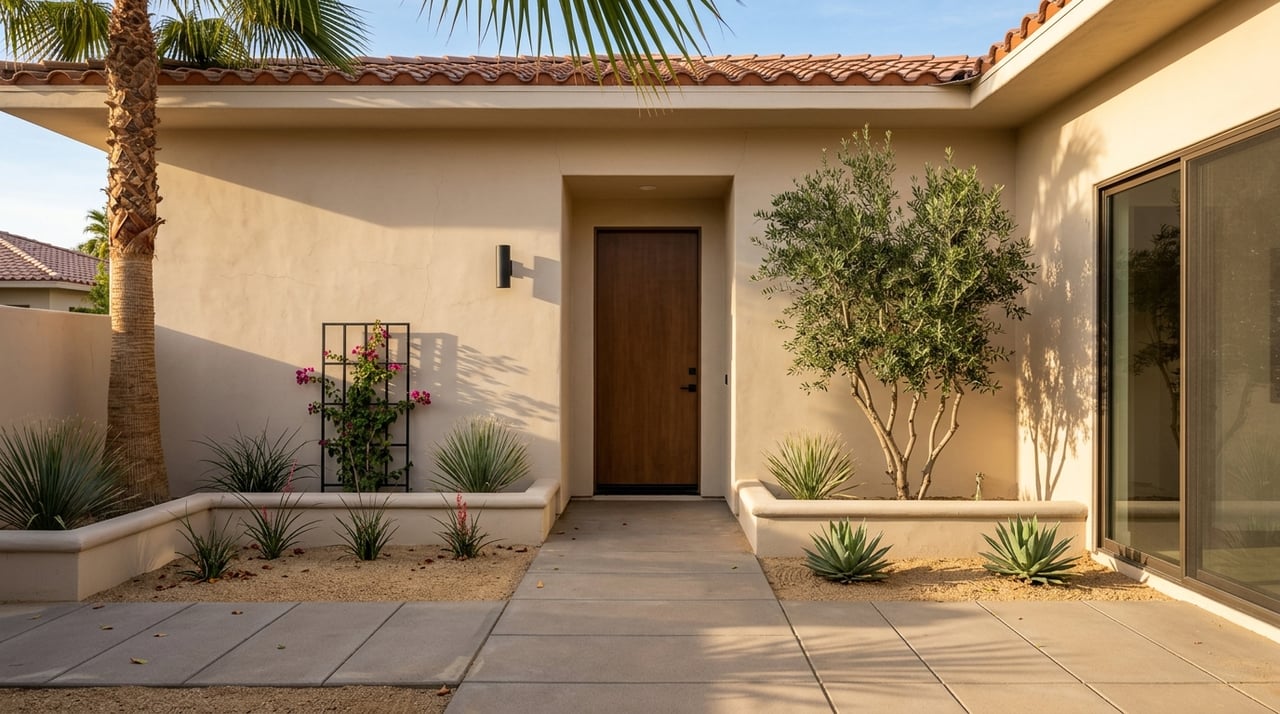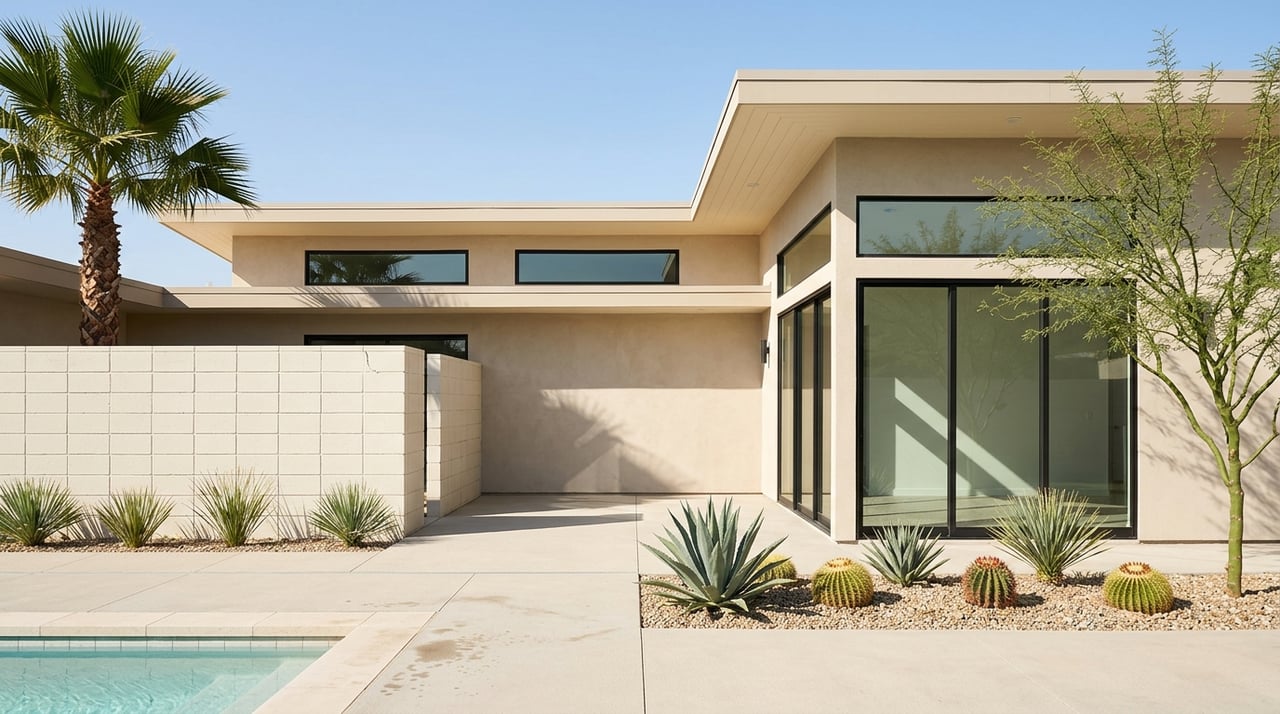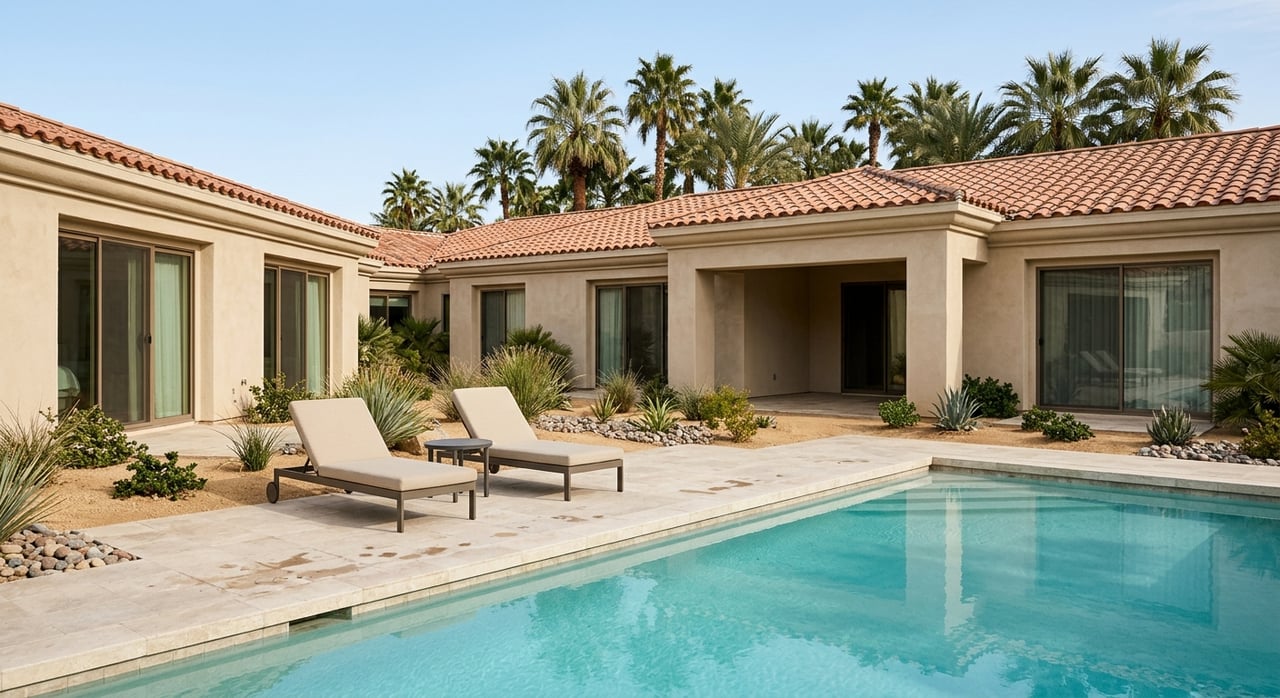
Looking for a second home that feels like a true getaway without feeling disconnected from everyday comforts? Rancho Mirage stands out for exactly that reason. If you want a desert retreat with a polished, low-key lifestyle, a strong seasonal-home market, and a wide range of property options, this city offers a lot to like. Let’s dive in.
Rancho Mirage has a resort-rooted identity
Rancho Mirage did not become a second-home destination by accident. Its appeal is tied to a long history shaped by resort living and country-club development.
The city’s historic survey breaks local growth into several phases, including a country-club era from 1951 to 1973. That period helped establish Rancho Mirage as the “city of country clubs,” with communities like Thunderbird Country Club and Tamarisk Country Club shaping the city’s identity.
That history still matters today because it influences how the city looks and feels. Rancho Mirage’s General Plan describes it as an oasis in the desert and a low-density, high-quality resort town with landscaped arterials and scenic views.
For second-home buyers, that planning identity matters. It helps explain why Rancho Mirage often feels more residential, club-oriented, and relaxed than a more entertainment-focused desert destination.
Seasonal living fits the local housing market
One of the strongest reasons Rancho Mirage attracts second-home owners is simple: seasonal living is already built into the market. The city’s own housing data shows that part-time use is a meaningful part of the local housing picture.
According to the city’s Housing Element, 31.5% of all housing units in the 2014 to 2018 ACS data were classified as seasonal, recreational, or occasional use. Overall vacancy was 39.5%, but after removing those seasonal and occasional-use homes, the effective vacancy rate drops to 8%.
That distinction is important. It suggests that a large share of homes that appear “vacant” in Census-style data are actually being used as part-time residences, not sitting empty in the traditional sense.
For buyers, that can make Rancho Mirage feel like a natural fit rather than a niche option. You are shopping in a market where seasonal ownership is already a recognized part of how the city functions.
The housing mix supports lock-and-leave ownership
Second-home buyers often want flexibility. You may want a spacious detached home, or you may prefer something easier to maintain when you are away.
Rancho Mirage offers both. As of 2020, single-family detached homes made up 55.1% of the city’s housing stock, while single-family attached homes accounted for 28.3%, multi-family homes 10.5%, and mobile homes 6.1%.
That mix helps support several second-home lifestyles. If you want a larger property with more privacy, detached homes are a major part of the market. If you prefer a lower-maintenance setup, attached homes and condo-style communities give you more options.
This variety is one reason Rancho Mirage appeals to both luxury buyers and those seeking a simpler seasonal retreat. You are not limited to one property type or one way of living in the desert.
Owner-occupied patterns reinforce stability
Rancho Mirage is also an owner-heavy market. Recent Census data shows that 82.0% of occupied housing units are owner-occupied.
That owner-occupied share helps support the city’s long-term residential character. Even with a strong seasonal-home presence, Rancho Mirage remains shaped by ownership rather than a primarily renter-driven housing pattern.
Other Census figures add context. The city’s July 2024 population estimate was 18,001, the average household size was 1.92 persons, and 52.6% of residents were age 65 or older.
Those numbers do not define every buyer, but they do help explain why Rancho Mirage often aligns with retirement-minded and seasonal living preferences. For many second-home shoppers, that can feel like a strong lifestyle match.
Amenities go beyond golf
Golf may get much of the attention, but Rancho Mirage offers more than fairways and clubhouses. That broader amenity base makes the city appealing for owners who want variety during longer seasonal stays.
Sunnylands is one of the clearest examples. The former Annenberg winter estate is now open to the public and offers tours, gardens, art workshops, wellness activities, films, music, and public dialogue programming.
That gives Rancho Mirage a cultural layer that complements its resort identity. You can enjoy a quieter, more refined desert experience without relying on a nightlife-centered scene.
The city also has strong civic amenities. The General Plan notes that the Rancho Mirage Public Library opened in 2006, spans more than 45,000 square feet, includes a 350-seat auditorium, holds more than 70,000 volumes, and hosts events and revolving exhibits. The observatory adds another community anchor.
Outdoor living is part of daily life
A second home works best when the area supports the lifestyle you want on a regular basis. In Rancho Mirage, outdoor recreation is woven into the city’s planning and identity.
The city’s recreation planning emphasizes golf, tennis, swimming pools, parks, trails, and bikeways. That means outdoor activity is not limited to one club or one neighborhood format.
For many seasonal owners, that matters as much as the home itself. You are not just buying four walls. You are buying into a place where movement, scenery, and outdoor amenities are part of everyday living.
Community styles fit different second-home goals
Rancho Mirage offers several community types that naturally appeal to second-home buyers. The right fit depends on how you want to spend your time and how hands-on you want homeownership to be.
Country-club communities
Country-club living remains one of Rancho Mirage’s signature formats. Communities tied to clubs often bring together recreation, dining, social events, and shared amenities in one setting.
Thunderbird Country Club describes a lifestyle that includes golf, tennis, wellness, social life, and a resort-getaway atmosphere. The Club at Morningside similarly highlights golf, tennis, pickleball, fitness, spa amenities, dining, and event spaces.
For second-home buyers, these communities can offer a strong all-in-one lifestyle. They also bring practical considerations like club membership structures and HOA dues, which are important to review early in your search.
Gated condo and duplex communities
If you want a more lock-and-leave setup, gated condo and duplex communities can be especially appealing. These neighborhoods often pair private ownership with community-managed amenities and shared maintenance responsibilities.
Los Cocos describes itself as a gated community with 72 privately owned duplex homes, along with pools, hydrotherapy spas, tennis and pickleball, and a clubhouse. Desert Island lists 226 units and amenities such as pools, spas, tennis courts, paddle boats, and fishing, plus HOA-provided services including trash collection and utility support for common areas.
That type of setup can be attractive if you want convenience during shorter stays or extended time away. It supports a more streamlined ownership experience while still offering a strong desert-resort feel.
Active-adult communities
Rancho Mirage also has appeal for buyers looking for age-restricted living. Del Webb at Rancho Mirage describes itself as a well-maintained senior community with active members.
That option fits naturally within the city’s broader demographic profile. If you are looking for a second home that may also support a future retirement plan, this kind of community can be worth exploring.
Rancho Mirage feels intentionally low-key
Not every second-home buyer wants constant activity. For many people, the biggest draw is a setting that feels calm, polished, and easy to enjoy over time.
That is where Rancho Mirage has a distinct edge. Based on the city’s planning language and development pattern, it reads as more low-key and residential than a desert destination built around nonstop entertainment.
This difference can shape your day-to-day experience in a meaningful way. If you value scenic streets, established residential communities, and a resort atmosphere that feels settled rather than busy, Rancho Mirage may be exactly what you are looking for.
What second-home buyers should keep in mind
If Rancho Mirage is on your list, it helps to think beyond price alone. The right property depends on how you plan to use the home and what kind of ownership experience you want.
As you compare options, pay close attention to:
- Property type, including detached versus attached living
- HOA structure and what services are included
- Club access, if the community is club-oriented
- Maintenance needs when the home is unoccupied
- How often you plan to visit each year
- Whether the home may later become a primary residence
These details can make a big difference in how well a home supports your goals. A beautiful property is important, but the day-to-day fit matters just as much.
Why local guidance matters in Rancho Mirage
Rancho Mirage has a clear second-home story, but it is not one-size-fits-all. One buyer may want a golf-oriented property with a full club lifestyle, while another may prefer a quieter gated condo that is easy to lock and leave.
That is why local insight matters. Understanding how seasonal use, community structure, housing type, and lifestyle amenities come together can help you narrow the search faster and make a more confident decision.
If you are considering a second home in Rancho Mirage, working with a team that understands both the numbers and the lifestyle can make the process much easier. When you are ready to explore the market, connect with Desert Cities Home for tailored guidance on Rancho Mirage communities, second-home options, and the broader Coachella Valley market.
FAQs
Why is Rancho Mirage popular with second-home buyers?
- Rancho Mirage appeals to second-home buyers because of its resort history, low-density planning identity, strong seasonal-housing patterns, and mix of detached and lower-maintenance homes.
What types of homes are common in Rancho Mirage?
- Rancho Mirage has a mix of housing types, including 55.1% single-family detached homes, 28.3% single-family attached homes, 10.5% multi-family homes, and 6.1% mobile homes.
What makes Rancho Mirage feel seasonal?
- The city’s Housing Element reports that 31.5% of housing units were classified as seasonal, recreational, or occasional use in 2014 to 2018 data, which is a strong official indicator of part-time ownership.
What can you do in Rancho Mirage besides golf?
- Rancho Mirage offers cultural and recreational amenities including Sunnylands, the public library, the observatory, parks, trails, bikeways, tennis, and pools.
What kinds of communities attract second-home owners in Rancho Mirage?
- Second-home buyers often consider country-club communities, gated condo or duplex communities, and active-adult neighborhoods, depending on the lifestyle and maintenance level they want.
Is Rancho Mirage a good fit for lock-and-leave living?
- Rancho Mirage can be a strong fit for lock-and-leave ownership because the city has a substantial share of attached homes and condo-style communities that support lower-maintenance seasonal living.